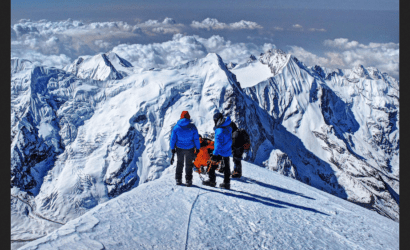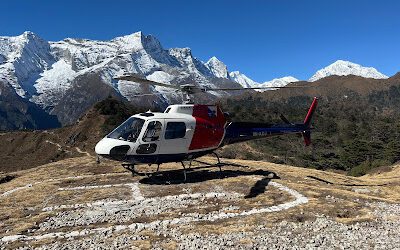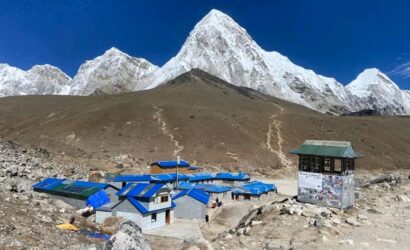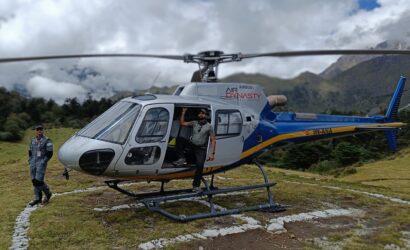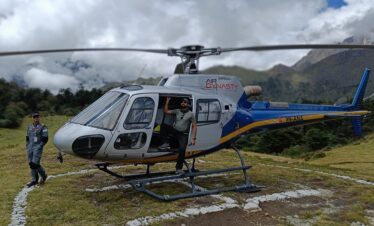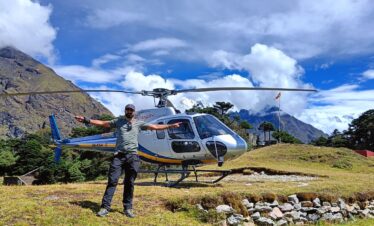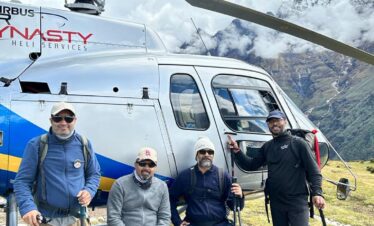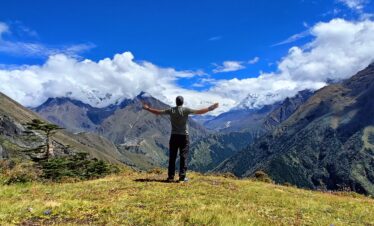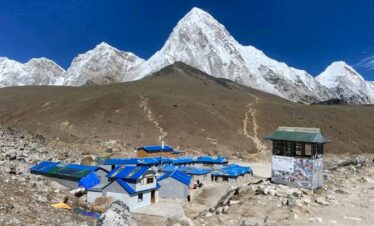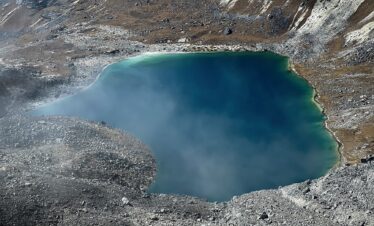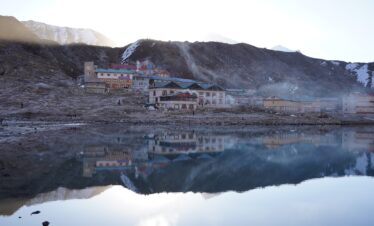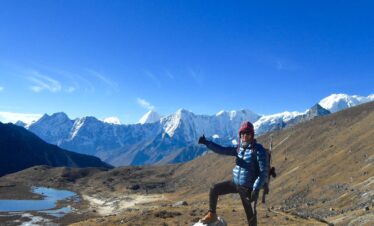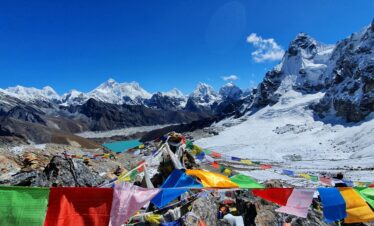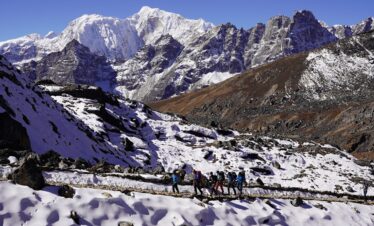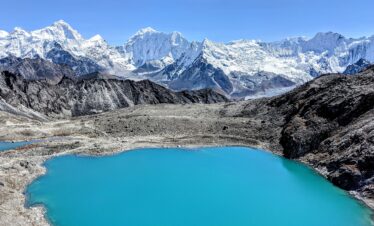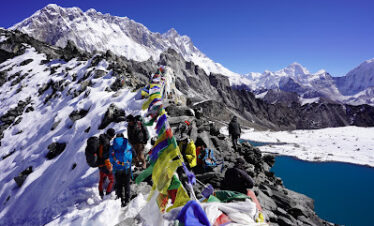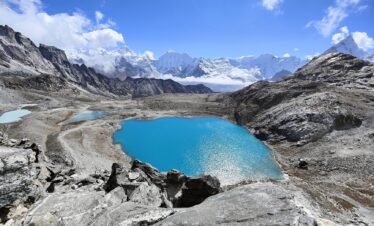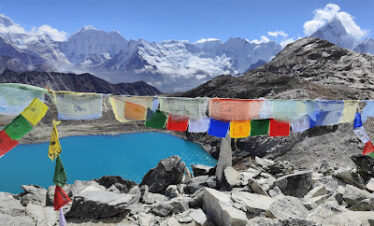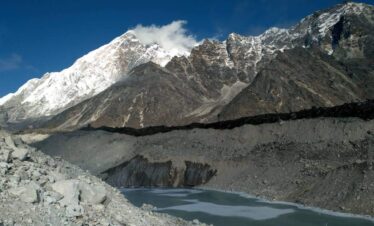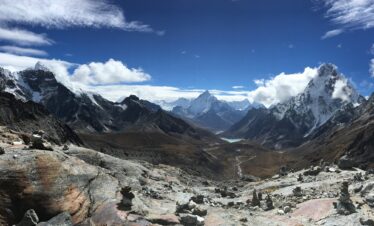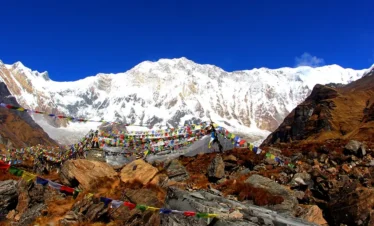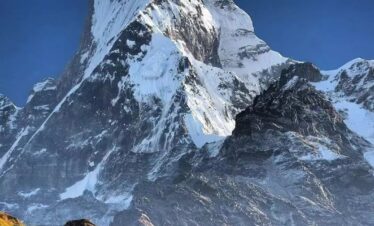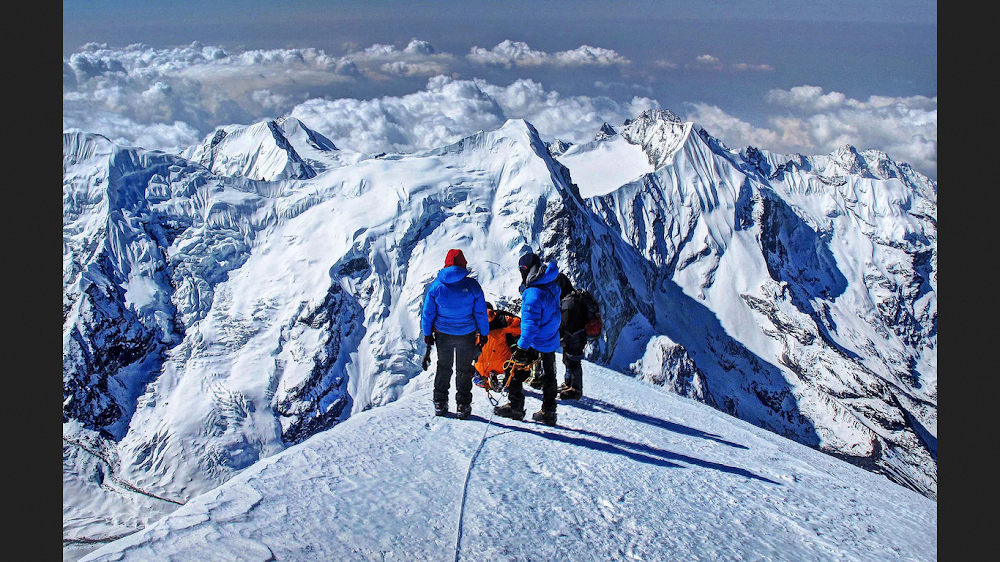
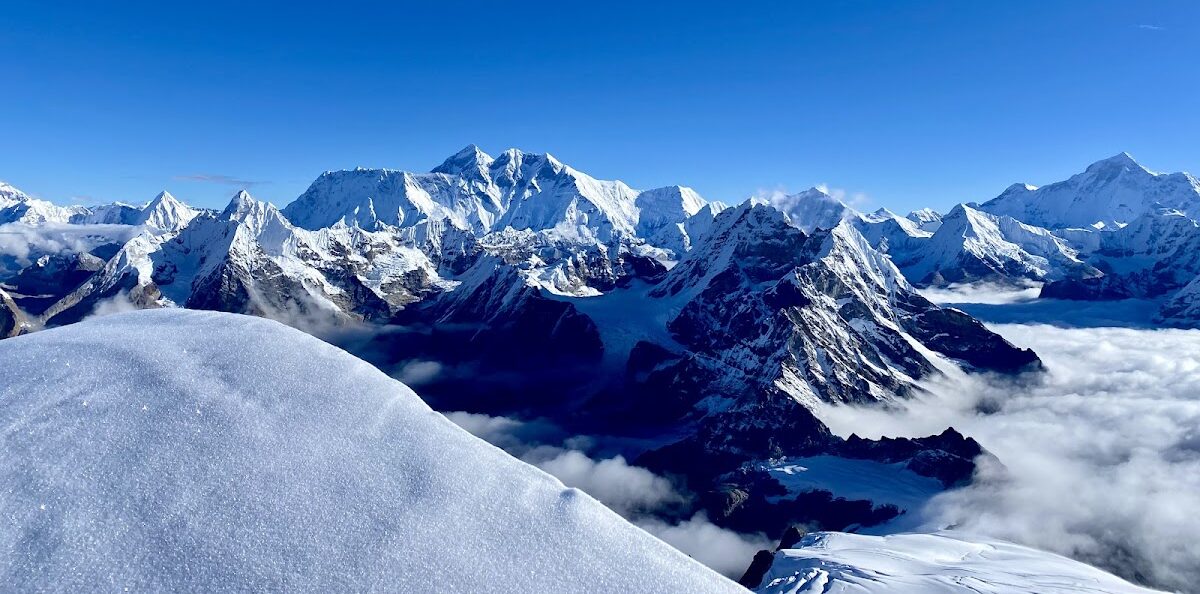
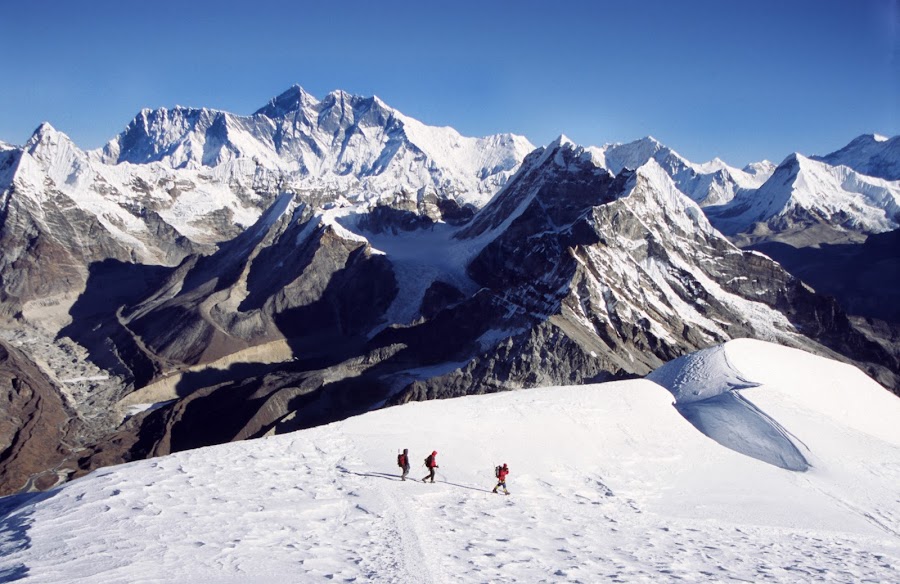
Mera Peak is the highest trekking peak in Nepal, standing at 6,461 meters (21,193 ft) in the remote Hinku Valley of the Everest region. The Mera Peak Climbing Nepal expedition is one of the best Himalayan adventures for trekkers seeking a true mountaineering experience with breathtaking views of the world’s highest mountains.
This guided Mera Peak expedition combines scenic trekking, glacier travel, alpine climbing, and unforgettable Himalayan landscapes. The climb is ideal for fit beginners, experienced trekkers, and adventure travelers preparing for larger mountaineering expeditions in Nepal.
The Mera Peak Expedition is ideal for trekkers and climbers looking to:
- Experience glacier climbing in Nepal
- Summit a Himalayan trekking peak
- Witness panoramic Everest region views
- Prepare for future 7000m or 8000m expeditions
- Explore the remote and beautiful Hinku Valley
Whether you are looking for your first Himalayan summit or a challenging trekking peak in Nepal, Mera Peak offers the perfect balance of adventure, altitude, and mountaineering excitement.
Quick Facts
| Trip Name | Mera Peak Climbing Nepal |
|---|---|
| Destination | Nepal |
| Region | Everest / Hinku Valley |
| Maximum Altitude | 6,461m / 21,193 ft |
| Trip Duration | 14 Days |
| Difficulty | Moderate to Challenging |
| Accommodation | Tea House & Tent |
| Best Season | Spring & Autumn |
| Group Size | 2–12 People |
| Start/End Point | Kathmandu |
| Climbing Style | Guided Expedition |

🏔️ Mera Peak Expedition (6,461m) – Nepal 🇳🇵
Experience the thrill of climbing Mera Peak Expedition, the highest trekking peak in Nepal. This 14-day Himalayan adventure combines glacier climbing, panoramic Everest region views, and expert Sherpa support for an unforgettable mountaineering experience.
✅ Expedition Includes
-
✈️Lukla Flights & Airport Transfers
Round-trip Kathmandu–Lukla flights with airport taxes included. -
🧑🏔️Professional Sherpa Climbing Guide
Experienced English-speaking trekking and climbing crew. -
🏨Accommodation & High Camp Tent
Tea house stays + tented accommodation at Mera High Camp. -
🍽️All Meals During Trek
Breakfast, Lunch & Dinner throughout the expedition. -
📜Permits & National Park Fees
Mera Peak climbing permit + Makalu Barun entry fees. -
⛏️Climbing Equipment Support
Rope, ice axe, ascender, descender & glacier safety gear.
⚠️ Exclusions & Add-Ons
-
🛌Kathmandu Hotel & Meals
Hotel stays and sightseeing in Kathmandu are excluded. -
🧥Personal Gear & Insurance
Climbing boots, jackets, travel insurance & rescue coverage. -
🎒Porter Service
Optional porter available at US$300 (23kg limit). -
☕Personal Expenses
Hot shower, WiFi, beverages, laundry & charging fees. -
💰Tips & Emergency Costs
Tips for staff and rescue evacuation costs are excluded.
Why Mera Peak Is the Ultimate First Summit in Nepal
Mera Peak (6,476m / 21,247ft) stands as Nepal’s highest permitted trekking peak — a true 6,000-metre Himalayan summit that demands genuine physical commitment but requires zero technical climbing experience. It is the benchmark introductory expedition for Indian and global adventurers stepping up from trekking into climbing for the first time.
Unlike the crowded Everest Base Camp corridor, the Mera Peak route winds through the Hinku Valley — one of Nepal’s most remote and pristine high-altitude valleys. You will cross rhododendron forests, high alpine pastures, and glacial moraines on a trail that receives a fraction of EBC’s footfall. The solitude is extraordinary.
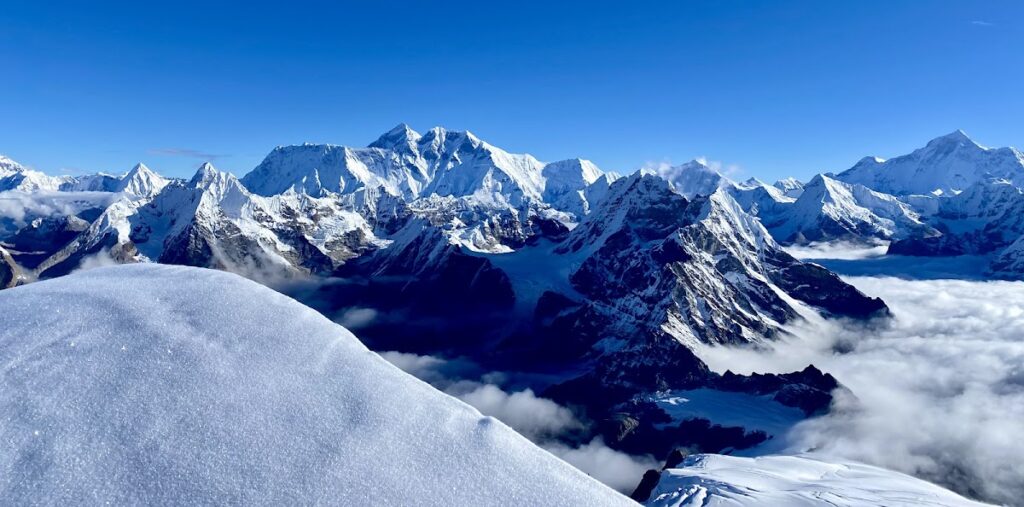
The summit reward is equally extraordinary. From the top of Mera Peak, five of the world’s ten highest mountains fill your entire field of vision: Everest (8,849m), Kanchenjunga (8,586m), Lhotse (8,516m), Makalu (8,485m), and Cho Oyu (8,188m). Experienced guides and climbers consistently describe this as the finest mountain panorama accessible to non-technical climbers anywhere in the Himalayas.
Attractions on Mera Peak Expedition
- Panoramic Summit Views: Five of the world’s 8,000m+ peaks.
- Hinku Valley: Pristine forests, rivers, Sherpa villages.
- Zatrwa La Pass: Dramatic high pass crossing.
- Wildlife & Culture: Possible sightings of Himalayan tahr; monasteries and local interactions.
- High Camp Experience: Epic sunrise over glaciers.
Height
6,461 meters
21,193 ft
Duration
14 Days
Full Expedition
Best Seasons
Spring (Mar-May)
Autumn (Sep-Nov)
Difficulty
Moderate-Challenging
PD Grade
Summit Views
Everest, Lhotse,
Makalu + 2 more
Starting Point
Lukla → Khare Base
About the Route
The standard North Face route begins in Lukla (2,840m) and immediately diverges from the EBC trail, turning south toward the wild Hinku Valley. The route crosses the Zatrwa La Pass (4,600m) twice — a dramatic high crossing that delivers first views of Mera’s summit block — before following the Hinku Khola river north through increasingly dramatic glacial terrain to Khare (5,045m), the last permanent settlement and expedition staging point.
Mera Peak Acclimatization & Elevation Pathway
Visualizing the Ascent to 6,461 Meters
Kathmandu & Lukla
Starting Line: 1,400m to 2,840m. The gateway to the Khumbu and Hinku valleys.
Zatrwa La Pass
The First Hurdle: 4,600m. A high-altitude pass crossed early to enter the isolated Hinku wilderness.
Khare Base Camp
The Staging Ground: 5,045m. Critical multi-day acclimatization and mandatory pre-climb alpine training.
Mera High Camp
The Launchpad: 5,780m. Perched on a rocky shelf, offering a freezing night before the final push.
Mera Peak Summit
The Pinnacle: 6,461m. Unparalleled views of Everest, Lhotse, Makalu, Cho Oyu, and Kangchenjunga.
From Khare, a final climb up the Mera Glacier reaches Mera High Camp (5,780m) before the pre-dawn summit push to Mera Peak Central Summit (6,461m).
Altitude Profile — 14-Day Mera Peak Expedition
The Mera Peak Expedition is more than a climb—it’s a transformative Himalayan journey blending adventure, culture, and personal achievement. With its unbeatable views and rewarding challenge, it’s a bucket-list must for passionate trekkers.
Don’t leave your safety and success to chance. Join Super Trekkers for a professionally guided, fully-supported Mera Peak Expedition. Our experienced team, proven itineraries, and personalized service ensure you reach the summit safely and create unforgettable memories.
Related Trips
Arrive at Tribhuvan International Airport (KTM) and transfer to your hotel in Thamel, Kathmandu. You will be met by your Super Trekkers expedition representative and transferred to the hotel.
The afternoon is dedicated to your pre-expedition briefing with your expedition leader — covering the route and logistics, altitude safety protocols, gear inspection, and permit paperwork. Use this time to rent any remaining equipment from Thamel's well-stocked climbing gear shops.
Welcome dinner with your team in the evening — the perfect chance to meet your Sherpa climbing guide and fellow climbers before the adventure begins.
Overnight: Kathmandu hotel (3-star, twin sharing)
Meals: Dinner (welcome dinner)
An early transfer to the domestic terminal for your 35-minute mountain flight to Lukla's Tenzing-Hillary Airport — one of the world's most dramatic runways, perched at 2,840m on a Himalayan hillside. In peak season (April–May), flights may operate from Ramechhap/Manthali Airport (3 hours from Kathmandu by road) to reduce congestion.
From Lukla, the trail immediately diverges from the busy Everest Base Camp route, heading south into the quieter Hinku Valley. Trek through pine and rhododendron forests, passing small Sherpa homesteads, to reach the high pastures of Chutanga.
Today's altitude gain is significant. Drink plenty of fluids, walk at a steady pace, and avoid overexertion on this first day at altitude.
Trek Distance: ~12km | Trek Time: 4–5 hours
Altitude Gain: +260m (Lukla 2,840m → Chutanga 3,100m)
Overnight: Teahouse, Chutanga
Meals: Breakfast / Lunch / Dinner
A challenging and scenically magnificent day crossing the Zatrwa La Pass (4,600m / 15,092ft) — the dramatic gateway between the Dudh Koshi Valley and the Hinku Valley.
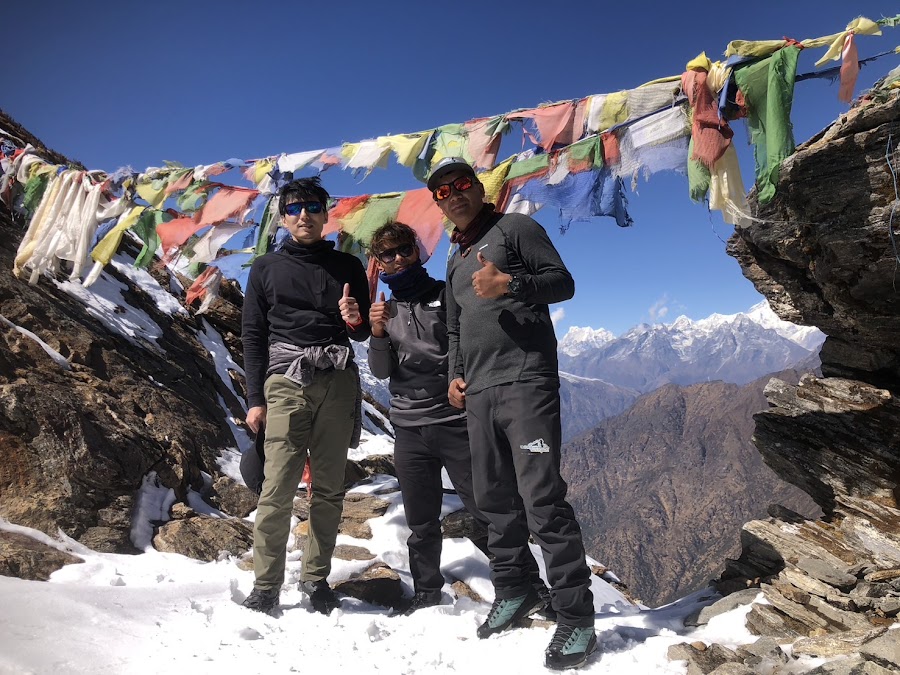
The ascent to Zatrwa La is steep and demanding, gaining nearly 1,500m from Chutanga. As you approach the pass, the landscape opens into wide alpine meadows with the first panoramic views of Mera Peak's north face ahead, and the Everest massif behind you. Prayer flags mark the pass summit.
The descent into the Hinku Valley is equally steep — take your time on the loose rocky trail. Reach the high pasture camp at Thuli Kharka, where yak herders camp seasonally.
This is the most physically taxing day of the approach route. Adequate hydration and a slow, steady pace are essential for altitude acclimatisation.
Trek Distance: ~14km | Trek Time: 5–6 hours
Altitude: Chutanga 3,100m → Zatrwa La 4,600m → Thuli Kharka 4,300m
Overnight: Teahouse / Camp, Thuli Kharka
Meals: Breakfast / Lunch / Dinner
Today's trail descends deep into the Hinku Valley, delivering a dramatic landscape transition from windswept alpine pastures into a lush, forested valley carved by glacial rivers. The altitude drops as you descend — a welcome relief that aids acclimatisation.
The path winds through birch and rhododendron forests, crossing suspension bridges over roaring glacial streams. The remoteness of the Hinku Valley is palpable: you will encounter very few other trekkers on this trail, sharing the path only with local Sherpa villagers and the occasional yak train.
Kothe is a small Sherpa settlement with basic teahouses and is one of the last points with reliable mobile network connectivity before the upper valley. Rest well — the altitude begins climbing again tomorrow.
Trek Distance: ~16km | Trek Time: 6–7 hours
Altitude: Thuli Kharka 4,300m → Kothe 3,691m (net descent)
Overnight: Teahouse, Kothe
Meals: Breakfast / Lunch / Dinner
A shorter but purposeful day ascending the Hinku Khola river valley upstream through increasingly dramatic high-altitude scenery. The trail follows the river north, gaining altitude steadily as the valley narrows and the landscape transitions from forested lower slopes to open glacial terrain.
Mera Peak's summit block becomes clearly visible ahead for the first time on this day — a powerful motivator. Baruntse (7,129m) and Mera La (5,415m) frame the upper valley skyline.
Thaknak sits at the edge of the permanent glacial zone and is the point at which the expedition character shifts from trekking to climbing preparation. Use the afternoon to rest and begin checking your technical equipment. Appetite may decrease at this altitude — make a conscious effort to eat and drink adequately.
Trek Distance: ~8km | Trek Time: 3–4 hours
Altitude Gain: +667m (Kothe 3,691m → Thaknak 4,358m)
Overnight: Teahouse, Thaknak
Meals: Breakfast / Lunch / Dinner
Thaknak to Khare — Crossing the 5,000m Mark
A significant milestone day: crossing the 5,000-metre altitude threshold for the first time. The trail from Thaknak crosses the Mera Glacier moraine — a landscape of boulders, glacial debris, and permanent ice — before arriving at Khare, the last permanently inhabited settlement on the route.
Khare (5,045m) is the expedition base camp. From here, Mera Peak's full summit block dominates the skyline. The raw, elemental landscape — permanent snow, boulder fields, and icy winds — makes the scale of the challenge ahead unmistakably real.
This evening your Sherpa climbing guide will conduct a full gear check, fitting you with crampons, harness, and ice axe, and inspecting all personal climbing equipment. Eat a hot dinner, drink plenty of fluids, and rest as much as possible — tomorrow is your critical acclimatisation and training day.
Trek Distance: ~7km | Trek Time: 3–4 hours
Altitude Gain: +687m (Thaknak 4,358m → Khare 5,045m)
Overnight: Teahouse, Khare
Meals: Breakfast / Lunch / Dinner
Khare — Acclimatisation Day & Mountaineering Training
This is the most important day of the entire expedition. A mandatory rest and practical mountaineering training day with your NMA-licensed Sherpa climbing guide.
Morning acclimatisation hike: A guided ascent to approximately 5,400m above Khare — higher than your sleeping altitude — and return. This "climb high, sleep low" protocol is the single most effective acclimatisation technique at altitude. The hike takes 2–3 hours and provides the first taste of glacier walking.
Afternoon technical training session covers all skills required for summit day:
- Crampon fitting and movement technique on snow and ice
- Ice axe arrest (self-arrest) technique
- Harness fitting and safety check
- Fixed-rope ascending technique using a jumar (ascender)
- Belay device setup and rope management
- Summit day protocol, turnaround times, and emergency procedures
Summit day briefing in the evening: weather forecast review, departure time (2–3am), pacing strategy, and cold weather protocols.
All participants must complete this training day regardless of prior experience.
Overnight: Teahouse, Khare
Meals: Breakfast / Lunch / Dinner
Khare to Mera High Camp — Glacier Ascent
The penultimate push before the summit. A long, demanding climb from Khare up the Mera Glacier to High Camp at 5,780m — the highest you will sleep on this expedition.
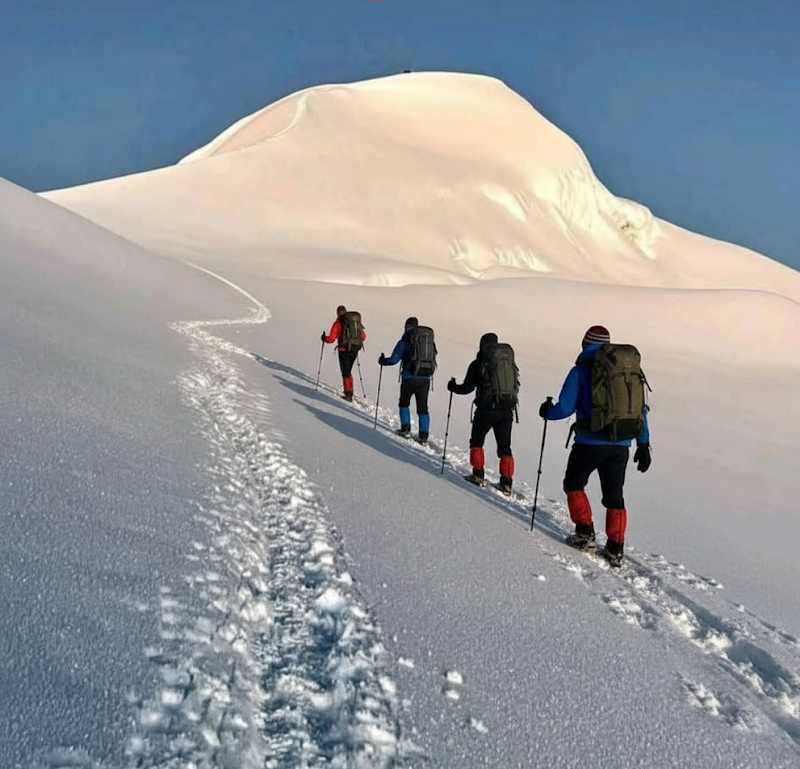
The trail from Khare to the glacier is rocky and steep. Once on the glacier itself, the team ropes up together and moves as a single unit, navigating crevasse zones under the guidance of your Sherpa lead climber. The gradient is sustained at 25–35 degrees for much of the upper glacier section.
As altitude increases, so does the panorama: the Hinku Valley falls away thousands of metres below, and the surrounding ring of Himalayan giants — Baruntse, Mera La, Chamlang — fills the horizon.
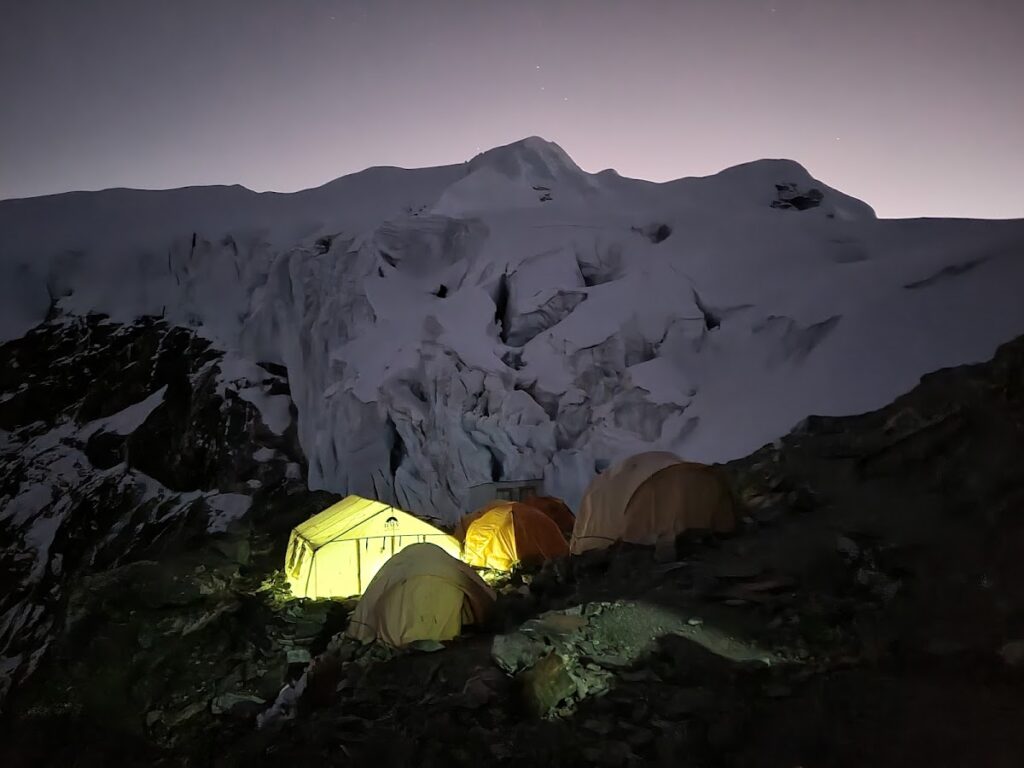
High Camp is a small, exposed collection of tents on the upper glacier. Arrive early afternoon, melt snow for water, eat a full hot dinner, and be in your sleeping bag by 7pm. Your alarm is set for 2–3am for summit day.
Trek Distance: ~8km | Trek Time: 5–6 hours
Altitude Gain: +735m (Khare 5,045m → High Camp 5,780m)
Overnight: Tented high camp (sleeping bag rated to -20°C essential)
Meals: Breakfast / Lunch / Dinner
★ SUMMIT DAY — Mera Peak (6,461m / 21,193ft) & Descend to Khare
The summit of the entire expedition. Every training session, every acclimatisation day, every 5am start has been building to this moment.
2:00–3:00am: Wake, hot drink, crampons on, ropes checked.
Pre-dawn ascent: The summit push begins in darkness, headtorches illuminating the glacier ahead. The final 700m of vertical gain from High Camp to the summit involves sustained climbing on 30–45 degree snow slopes, with fixed ropes protecting the steeper upper section. Your Sherpa guide leads, paces, and supports every step.
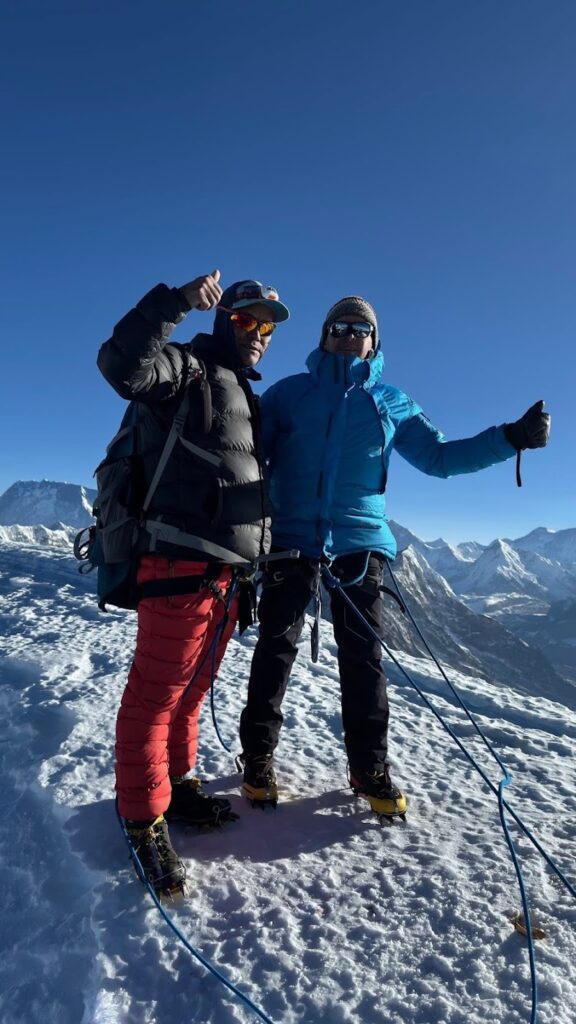
Mera Peak Central Summit (6,461m): On a clear day, the view from the top is among the most extraordinary on earth. Five of the world's ten highest mountains surround you in a complete panorama — Everest (8,849m), Kanchenjunga (8,586m), Lhotse (8,516m), Makalu (8,485m), Cho Oyu (8,188m) — plus Ama Dablam, Baruntse, Chamlang, and dozens of lesser-known but no less spectacular peaks. Allow yourself to absorb this view completely.
Descent: Begin descent by mid-morning to avoid afternoon weather deterioration. Descend from High Camp back to Khare — a long, tiring but triumphant walk. Total summit day: 11–12 hours, approximately 12km.
Altitude: High Camp 5,780m → Summit 6,461m → Khare 5,045m
Overnight: Teahouse, Khare
Meals: Breakfast / Lunch / Dinner
Contingency Day — Reserve Summit Window at Khare
This day serves two equally important purposes:
- Reserve summit window: If adverse weather or individual medical conditions prevented the summit attempt on Day 9, today provides a second opportunity. Your guide will assess weather forecasts and team fitness to determine whether a second summit attempt is viable.
- Rest and recovery: If Day 9 was a successful summit, today is devoted to rest and recovery at Khare before the long multi-day descent begins. Post-summit fatigue at altitude is real — a recovery day prevents injuries and illness during the descent.
The contingency day is not a luxury addition — it is a core part of what makes this itinerary achieve a 95% summit success rate rather than the 70–75% rate achievable with rush itineraries.
Overnight: Teahouse, Khare
Meals: Breakfast / Lunch / Dinner
Khare to Thuli Kharka — Long Descent via Kothe
A long descending day through the Hinku Valley, but the mood is entirely different from the ascent — celebratory, relaxed, and filled with the satisfaction of a summit achieved. The altitude drops steadily as you retrace the valley south, and with it comes the welcome sensation of thicker air and stronger legs.
Pass back through Kothe — where you may recognise the teahouse owners from your ascent — and continue south up to Thuli Kharka. The day is physically tiring despite the net descent, as significant re-ascent is required in the final section to reach Thuli Kharka's high-pasture elevation.
Trek Distance: ~20km | Trek Time: 8–9 hours
Overnight: Teahouse, Thuli Kharka
Meals: Breakfast / Lunch / Dinner
Trek to Lukla via Zatrwa La Pass — Final Mountain Day
The final trekking day of the expedition — a fitting farewell to the Hinku Valley. Cross Zatrwa La Pass (4,600m) for the last time, pausing at the summit to look back at the Hinku Valley that has been your home for nearly two weeks, and at Mera Peak's summit, where you stood just days ago.
The descent to Lukla is long but well-marked. As you drop from 4,600m to 2,840m, the air progressively thickens and the warmth of lower altitude becomes a physical luxury after days above 5,000m.
Arrive in Lukla in the late afternoon. Celebrate the expedition with your team, Sherpa guides, and porters over dinner at a Lukla teahouse. A well-earned sleep at 2,840m before the flight home tomorrow.
Trek Distance: ~18km | Trek Time: 5–6 hours
Overnight: Teahouse, Lukla
Meals: Breakfast / Lunch / Dinner
Fly Lukla to Kathmandu — Summit Celebration Dinner
Early morning flight from Lukla back to Kathmandu — the same 35-minute mountain flight that began the expedition, now carrying you home as a Mera Peak summiteer.
Transfer to hotel in Kathmandu. Time to shower, rest, and begin processing the experience. The afternoon is free for shopping in Thamel for souvenirs, final gear returns, or simply resting.
In the evening: Summit Celebration Dinner with your Super Trekkers team and Sherpa guides. Your Mera Peak Climbing Summit Certificate — issued by the Nepal Mountaineering Association — will be presented this evening. This is your official record of having summited Nepal's highest trekking peak.
Overnight: Kathmandu hotel
Meals: Breakfast / Dinner (farewell dinner)
Departure from Kathmandu — Expedition Ends
Transfer to Tribhuvan International Airport for your onward flight home. The Mera Peak Expedition ends here — but the experience, the friendships formed on the trail, and the view from Nepal's highest trekking peak will stay with you for the rest of your life.
Please ensure your departure flight is scheduled for afternoon or later to allow adequate time from hotel to airport.
Our team is available to assist with any onward travel arrangements, Kathmandu extensions, or future expedition planning.
Meals: Breakfast